
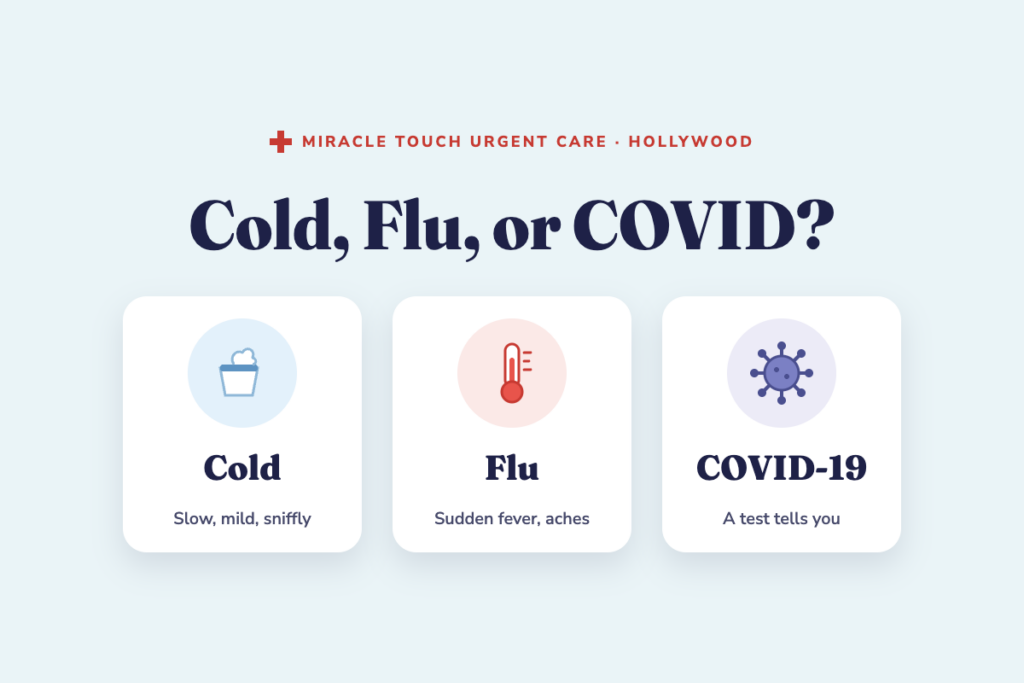
Cold, Flu, or COVID? How to Tell the Difference
You wake up with a scratchy throat and a stuffy nose. Is it just a cold, or something more? Colds, the flu (influenza), and COVID-19 are all caused by viruses that affect your nose, throat, and lungs. Their symptoms overlap a lot, which makes them hard to tell apart.
Knowing the difference helps you decide whether to rest at home, get tested, or see a provider. Some treatments for flu and COVID-19 work best when started within the first few days of symptoms.
The Common Cold
A cold usually comes on slowly and stays mild. Most people feel better in 7 to 10 days.
Common symptoms:
- Runny or stuffy nose
- Sneezing
- Sore throat
- Mild cough
- Low or no fever
Colds rarely cause high fever or severe body aches. If you have those, it’s more likely the flu or COVID-19.
The Flu
The flu tends to hit suddenly and hard. Many people say they felt fine in the morning and terrible by the afternoon.
Common symptoms:
- Fever and chills
- Body aches and headache
- Extreme tiredness
- Dry cough
- Sore throat and stuffy nose
Flu season usually peaks in the fall and winter. The flu can lead to serious problems like pneumonia, especially for young children, adults over 65, pregnant people, and people with ongoing health conditions.
COVID-19
COVID-19 can look like a cold or the flu, and symptoms range from mild to severe. They often appear 2 to 14 days after exposure.
Common symptoms:
- Fever or chills
- Cough
- Sore throat
- Tiredness and body aches
- Headache
- Congestion or runny nose
- New loss of taste or smell (less common than earlier in the pandemic, but still a clue)
Because COVID-19 and the flu look so similar, a test is the only reliable way to know which one you have.
Symptoms Side by Side
Symptom | Cold | Flu | COVID-19 |
|---|---|---|---|
How it starts | Gradually | Suddenly | Gradually or suddenly |
Fever | Rare | Common | Common |
Body aches | Mild | Common, often severe | Common |
Tiredness | Mild | Common, often severe | Common |
Runny or stuffy nose | Common | Sometimes | Sometimes |
Sneezing | Common | Sometimes | Sometimes |
Loss of taste or smell | Rare | Rare | Sometimes |
Why Testing Matters
A quick test can tell you whether you have the flu or COVID-19. That matters for two reasons:
- Treatment: Antiviral medicines for flu and COVID-19 work best when started early, usually within the first few days.
- Protecting others: Knowing what you have helps you decide how long to stay home and away from family, coworkers, and classmates.
Antibiotics don’t treat colds, the flu, or COVID-19, because all three are caused by viruses. A provider can tell you which treatments will actually help.
When to See a Provider
Visit urgent care if you:
- Have a fever that lasts more than 3 days
- Have symptoms that improve and then get worse again
- Have a cough that won’t go away
- Have ear pain or sinus pain and pressure
- Are at higher risk for complications and think you have the flu or COVID-19
- Need a test to confirm what you have
Go to the ER or call 911 if you have trouble breathing, chest pain or pressure, new confusion, bluish lips or face, or can’t stay awake.
How to Feel Better at Home
For mild symptoms, these steps can help:
- Rest as much as you can
- Drink plenty of fluids
- Use over-the-counter medicines for fever and aches as directed on the label
- Use a humidifier or saline spray for congestion
- Wash your hands often and cover coughs and sneezes
Getting your yearly flu shot and staying up to date on COVID-19 vaccines are the best ways to lower your risk of serious illness.
Get Checked at Miracle Touch Urgent Care in Hollywood
Not sure what you have? The team at Miracle Touch Urgent Care can examine you, help you figure out what’s going on, and recommend the right treatment so you can get back to feeling like yourself.
Call us at (323) 673-7200 or walk in today.
This article is for general information and isn’t a substitute for medical advice. In an emergency, call 911.